Our Deities
Discover the divine forms worshipped at our temple and their spiritual significance
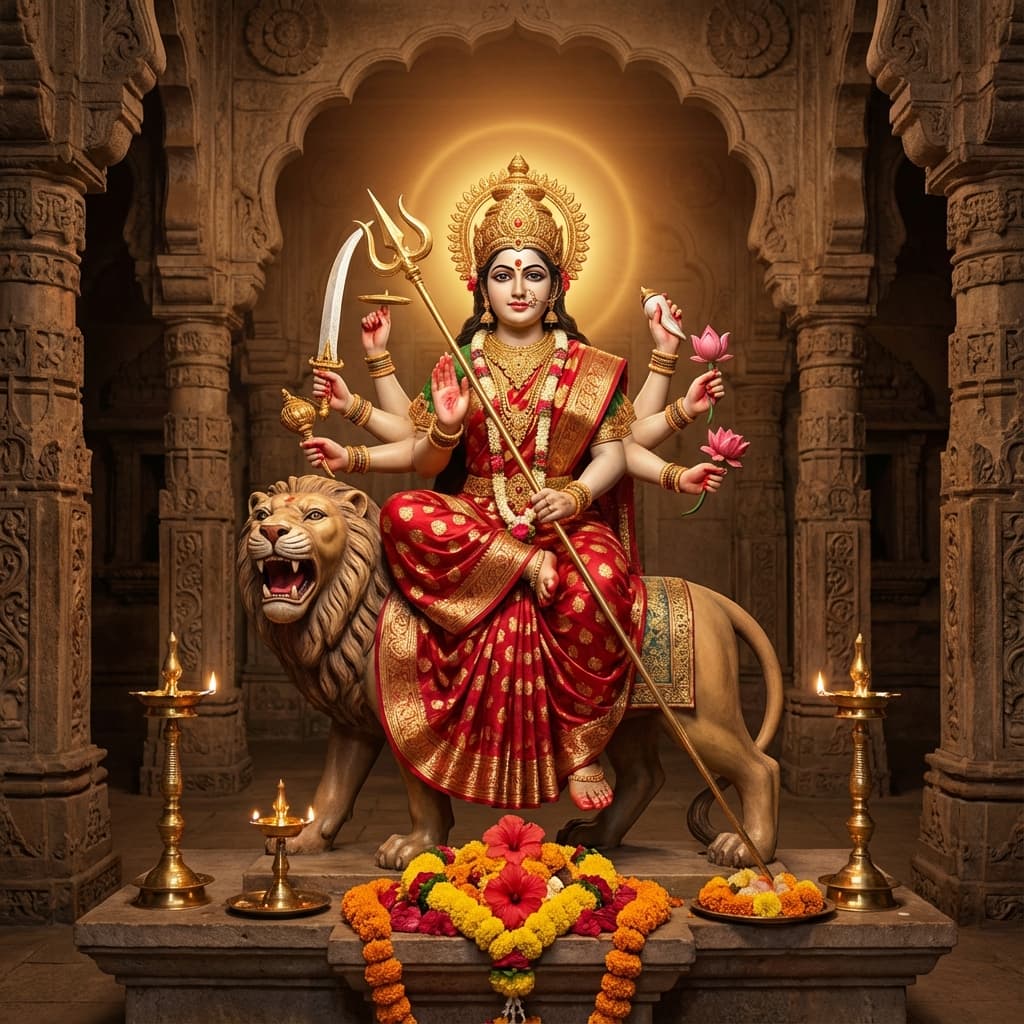
Maa Durga
The presiding deity of the temple, Maa Durga is the divine mother who represents the power of the Supreme Being. She is worshipped as the destroyer of evil and protector of devotees.
Festivals:
Navratri, Durga Puja, Vijayadashami
Special Days:
Every Tuesday, Every Friday
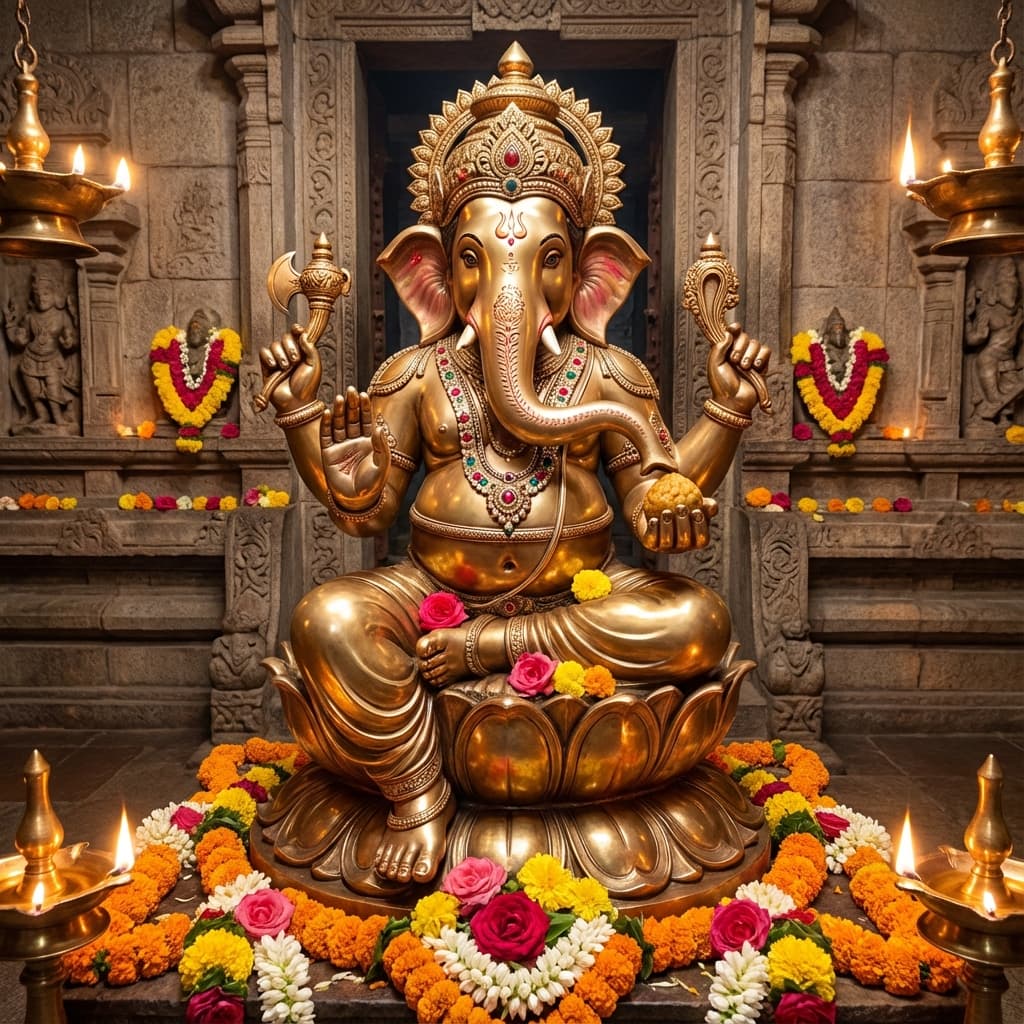
Lord Ganesha
The remover of obstacles and the god of wisdom, Lord Ganesha is worshipped before any auspicious work.
Festivals:
Ganesh Chaturthi
Special Days:
Every Wednesday
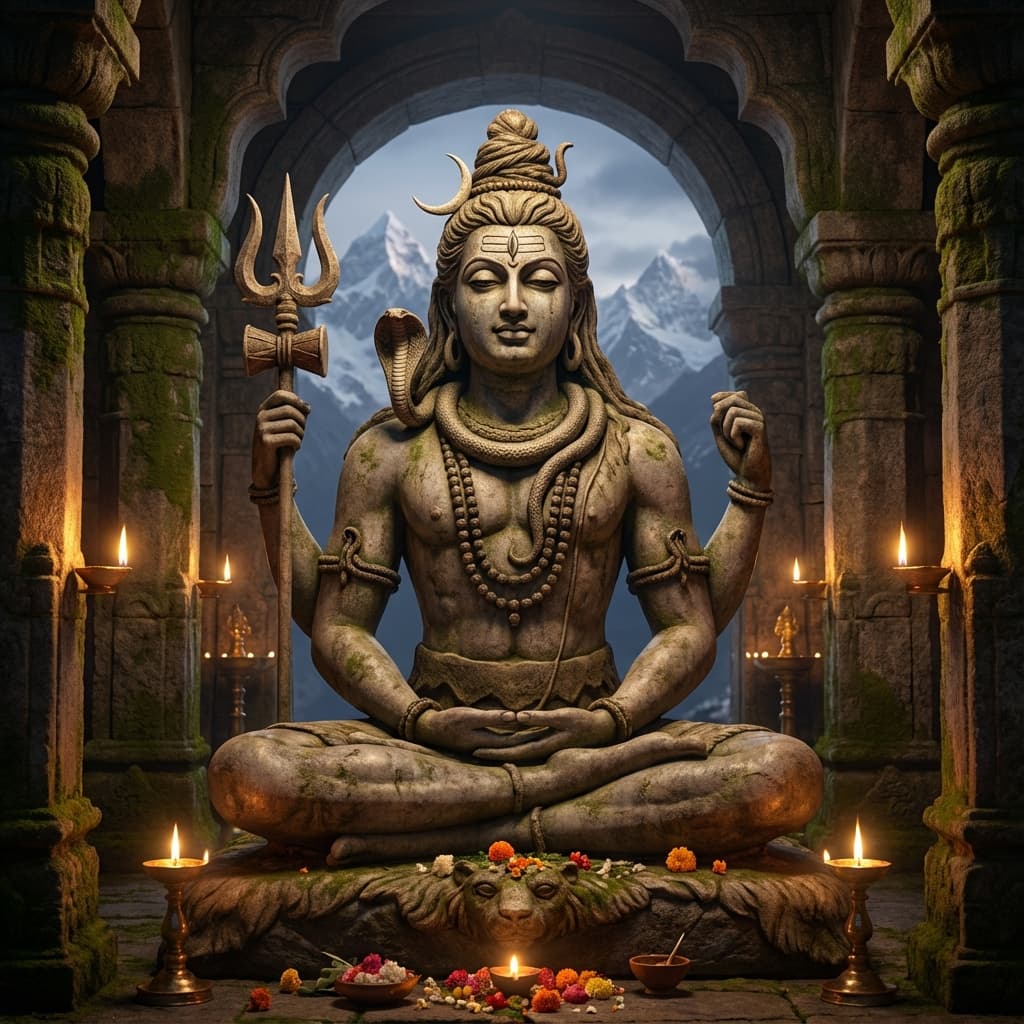
Lord Shiva
The destroyer and transformer, Lord Shiva represents the ultimate reality and consciousness.
Festivals:
Maha Shivaratri, Shravan
Special Days:
Every Monday
Shri Prasanna Ganapathi
Installed to the right of Devi Adisakthi is the Lord Prasanna Ganapathi who bestows clarity of mind, harmony, success without struggle, and emotional ease. He is worshipped to remove subtle inner blocks such as fear, doubt, and restlessness, and to invite smooth beginnings in spiritual and worldly pursuits. The special sevas offered to him includes Ranga Pooja, Mooduganapthi Seva and Sankasti Ganapathi Yaga.
Festivals:
Ganesh Chaturthi, Sankasti Chaturthi
Special Days:
Every Wednesday, Sankasti Chaturthi
Shri Balasubrahmanya
To the left of Adishakthi Amma, lies a dedicated sanctum for Lord Balasubrahamanya. Balasubrahmanya is worshipped to awaken inner bravery, clarity, learning, and moral strength, especially in children and students. His presence nurtures enthusiasm, sharp intellect, and a joyful sense of purpose, guiding devotees to face life's challenges with confidence and childlike sincerity.
Festivals:
Skanda Shashti, Karthigai Deepam
Special Days:
Every Tuesday
Shri Mukhyaprana
Shri Mukhyaprāṇa is the supreme life-force (Prāṇa Tattva) and the divine manifestation of Vāyu Deva. Worship of Shri Mukhyaprāṇa bestows physical vitality, mental clarity, courage, and steadfast bhakti, while removing fear, weakness, and inertia. He inspires the seeker to live with selfless service, moral firmness, and surrender, making him the eternal guide for those walking the path of dharma and devotion. The special sevas offered to him includes Ranga Pooja, Vayustuthi Homa & Madhu Abhishekam.
Festivals:
Hanuman Jayanti
Special Days:
Every Tuesday, Every Saturday
Nathyaraani Gandharva Kanye
The most revered seva of the temple, Nrthya Seva is connected to this deity. The history of the temple says there existed a dancer who sought blessings of Adishakti by offering dance and arts of various form. People who have had blockages and have seen no success in the field of art and dance have seen quick and great success in their respective field after worshipping Gandharva Kanye and Devi Adishakti.
Kubera Chitralekha Sahita Mahalaxmi
Kubera–Chitralekhā Sahita Mahālakṣmī Sannidhānam signifies the divine presence of Goddess Mahālakṣmī, seated with Kubera, the lord of wealth, and Chitralekhā, symbolizing disciplined accounting and righteous management of prosperity. This sacred combination represents abundance governed by dharma, where wealth flows with balance, responsibility, and purity. This sannidhānam is one of its kind in India, making the temple uniquely significant. A special Amāvasyā evening Prasanna Pūjā is offered here, invoking the compassionate and easily-pleased aspect of Mahālakṣmī to bless devotees with sustainable prosperity, financial clarity, protection of resources, and inner peace. The shrine reminds seekers that true wealth is not mere accumulation, but rightly earned, wisely managed, and divinely guided abundance bestowed by the grace of Mahālakṣmī.
Festivals:
Diwali, Varalakshmi Vratam
Special Days:
Amavasya, Every Friday
Yakshikannike Sahita Yaksheshwari
Yakshikannike Sahita Yaksheshwari represents the divine presence of the Yaksha deities, guardians of wealth and natural treasures. This sacred sannidhānam bestows protection, prosperity, and harmony with nature.
Sri Kalabhairava
Kālabhairava is the fierce yet compassionate form of Lord Śiva, the guardian of time (kāla) and cosmic order. He embodies discipline, fearlessness, and protection, destroying ignorance, ego, and negativity. Standing erect behind Adishakthi, as the kṣetrapāla (divine guardian), Kālabhairava safeguards the temple.
Festivals:
Kalabhairava Jayanti
Special Days:
Every Monday, Every Tuesday
Kapila Maharshi Sannidanam
Kapila Maharshi Sannidhānam marks the sacred presence of Sage Kapila, the mūla-guru of this holy place. It was through his intense tapas that Ādi Śakti was deeply pleased, and it was Kapila Maharshi who worshipped the Goddess at this very site centuries ago, establishing its powerful spiritual lineage. History tells that the temple was once a vibrant center of learning, where Vedic studies and various art schools flourished, offering shelter and guidance to countless students. Even today, devotees visit Kapila Maharshi Sannidhānam seeking relief from Guru Doṣa, Guru Śāpa, and to receive the grace of the Guru for clarity, learning, and right direction in life.
Festivals:
Guru Purnima
Special Days:
Guru Purnima
Shatshira Subrahmanya Swami
Valli–Devayāni Samhita Śat-Śirasa Subrahmaṇya Swāmi enshrined in this temple is a one-of-a-kind idol, signifying the rare and powerful grace of Lord Subrahmaṇya with both his divine consorts. This unique form symbolizes balance, righteous action, and the removal of deep-seated obstacles. Devotees visit this sannidhānam to light lamps—especially ghee lamps every Tuesday evening—to seek relief from Khuja Doṣa, which is believed to block important life aspects such as career progress and marriage. With sincere worship, Subrahmaṇya Swāmi's grace is said to restore clarity, confidence, and forward movement in life.
Festivals:
Skanda Shashti, Karthigai Deepam
Special Days:
Every Tuesday
Panchamukhi Gayathri Devi
Pañchamukhi Gāyatrī Devī, enshrined in this temple, is the powerful five-faced form of the Divine Mother, symbolizing the five prāṇas, five elements, and five aspects of supreme knowledge. Each face represents illumination of a different dimension of consciousness—wisdom, purity, strength, protection, and spiritual awakening. Worship of Pañchamukhi Gāyatrī Devī bestows clarity of intellect, removal of ignorance, inner discipline, and divine protection. Devotees seek her grace for success in education, spiritual progress, and balance in life, as her presence here radiates profound tejas (spiritual brilliance) and guidance on the path of dharma.
Festivals:
Gayatri Jayanti
Special Days:
Every Sunday
Nagalaya
Nāgālaya, the sacred abode of Nāga Pañcha Brahma Sthāna along with Nāgarāja and Nāgarāṇi, represents the divine seat of serpent energy and the fivefold Brahma tattva. This powerful space symbolizes creation, protection, transformation, and earth-connected spiritual energy. Devotees worship at Nāgālaya to seek relief from Nāga Doṣa, ancestral imbalances, delays in marriage or progeny, and subtle disturbances in life. The presence of Nāgarāja and Nāgarāṇi bestows divine protection, lineage harmony, and overall well-being.
Festivals:
Nag Panchami
Special Days:
Nag Panchami, Every Saturday